
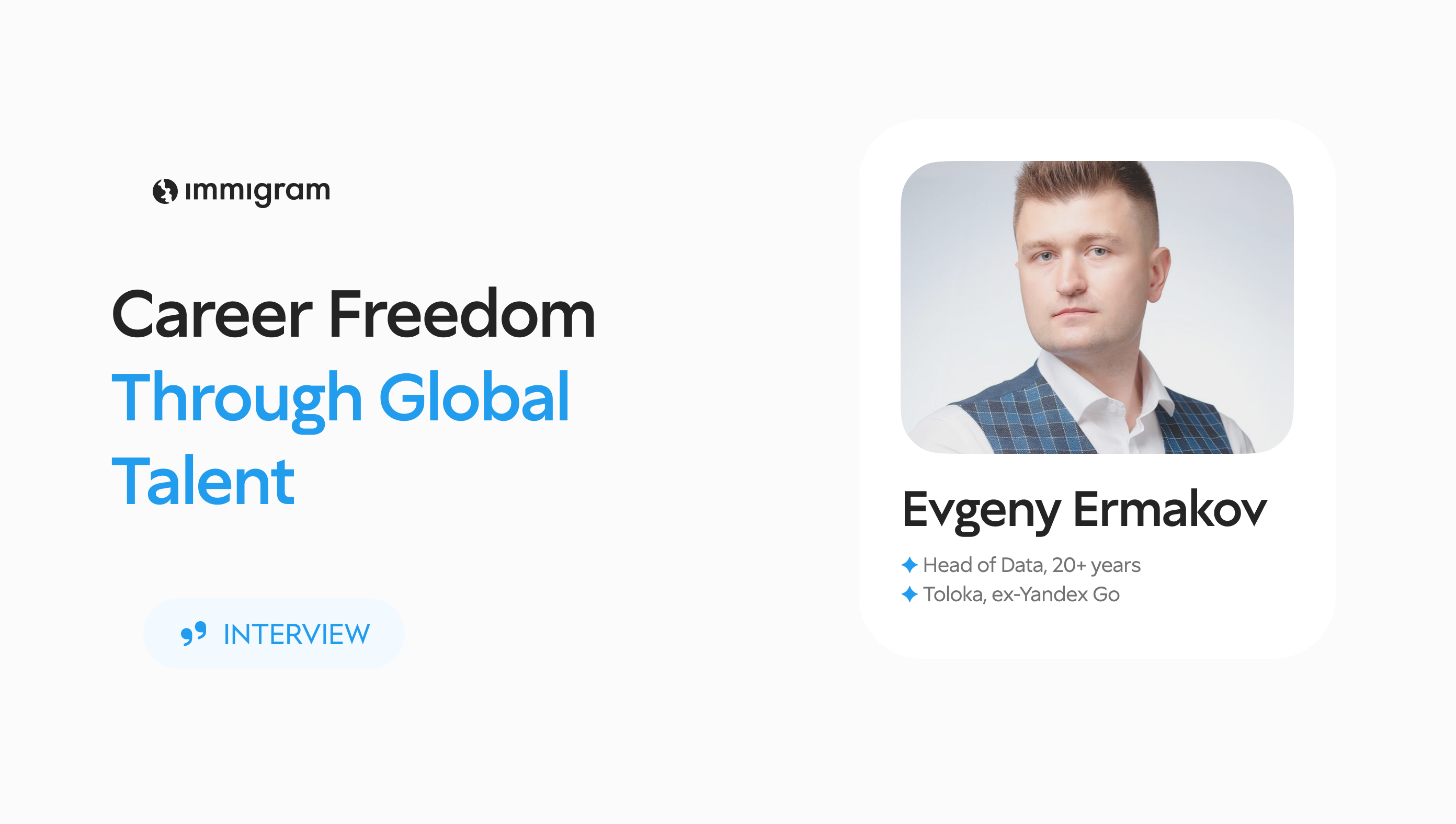
The Global Talent visa in the UK has certainly broadened my professional opportunities, though the impact wasn’t as immediate or dramatic as it’s often portrayed. Its biggest advantage is the freedom to choose employers and work independently in my field, without being tied to a single company.
It also made it easier to explore different roles and take on freelance or consulting projects. Still, integrating into the UK job market took time — competition is high, and success relies heavily on networking and adapting to the local professional culture.
The relocation itself required quite a bit of effort: I had to handle practical matters, get settled, and adjust to a new environment. However, having Global Talent status gave me a sense of stability — I knew I could legally stay in the country and make long-term plans, independent of any employer.
I should also mention that the application process is fairly complex and requires thorough preparation of a portfolio and strong recommendation letters. But once you receive the status, you gain far more flexibility in your work and future prospects.
Before applying for the Global Talent visa, I built my career in both large tech companies and startups, working as a data architect and team leader. I led teams of up to 50 people, designed scalable data platforms, and implemented modern data management practices for companies like Yandex, Toloka.ai, and Mail.ru Group. I was also actively involved in education, creating and teaching courses on DWH and Data Engineering, speaking at professional conferences, and even authoring a book on parallel databases. My experience spans both the technical and managerial sides of the data world.
What attracted me to the Global Talent visa was primarily its flexibility and the opportunities it offers for professional growth. Unlike standard work visas, it isn’t tied to a specific employer, giving the freedom to choose projects and companies, launch personal initiatives, or work as a consultant. For me, as a data leader and architect, this was particularly important — I wanted to develop my career on an international level, work in a dynamic environment, engage with the professional community, and share my expertise through educational projects.
I began by reviewing the Global Talent visa requirements and assessing how my experience, achievements, and public activities matched UK expectations. It quickly became clear that a strong résumé alone wasn’t enough — the portfolio needed to be well-structured, with relevant evidence and clear presentation of project results.
Given the complexity of the process, I sought professional help. Consultants guided me in highlighting key achievements, preparing recommendation letters, and structuring the application to meet the Endorsement criteria, which helped avoid common mistakes and increased the chances of approval.
Currently, I’m focused on growing my consulting business in the UK, iJKos.com. I provide strategic support for data platform development, DWH architecture optimization, modern analytics implementation, and data management best practices. My clients include tech companies, startups, and large enterprises seeking expert guidance in building efficient data ecosystems.
Alongside consulting, I remain active in the professional community by giving lectures, speaking at industry events, and developing educational projects. More about my experience, services, and case studies can be found on iJKos.com.
Prepare your application carefully and don’t underestimate the evidence-gathering stage. Even with a strong résumé, highlight projects, publications, and recommendations that align with Global Talent criteria. Include all professional activities — talks, educational initiatives, open source contributions, and public engagements. Study official requirements and successful cases, and consider seeking guidance from experts. The process takes time and effort, but approached systematically, it’s achievable and opens great opportunities for growth.


