
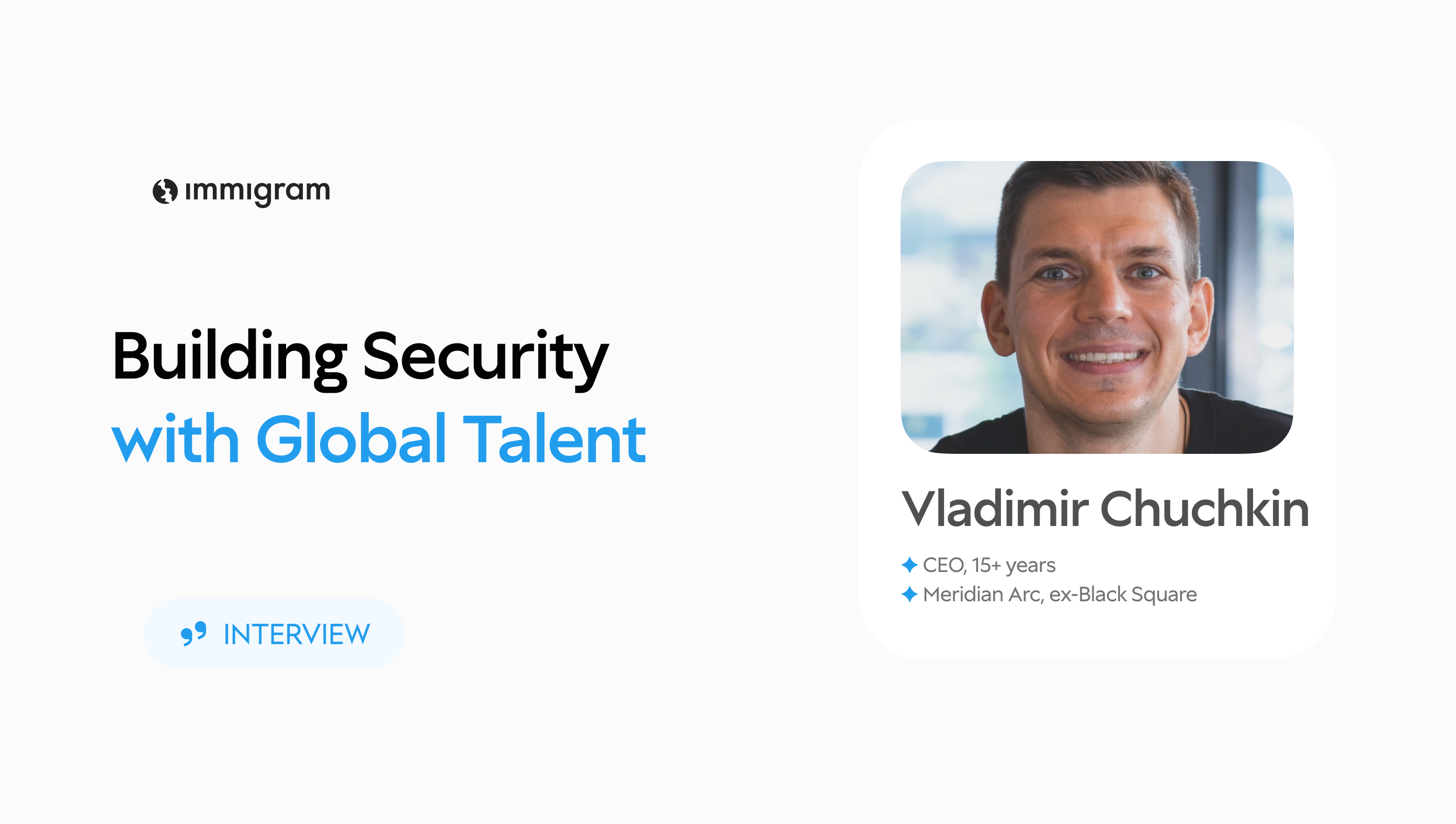
We moved from Singapore to the UK for several reasons. One of them was family-related: the UK felt like a more convenient place to live for our family than Asia. The UK’s location made it easier to stay closer to our relatives, most of whom live in Russia. We were also looking for a clearer and more predictable path towards obtaining a second citizenship.
At the time, I was the founder and CEO of a start-up developing waste management systems for enterprise-level international clients across Asia, Australia, and Europe. Despite being a relatively small company, we achieved strong results in implementation and sales in markets such as Australia, Singapore, Hong Kong, and Thailand.
The UK stood out for its concentration of innovation and enterprise clients in our sector. From a venture capital perspective, Europe—and the UK in particular—was ahead of Asian markets, offering greater access to capital and more favorable conditions for negotiating higher valuations.
My business partner and I decided to relocate and move the company’s headquarters to London. After consulting immigration lawyers, we chose between the Innovator and Talent visas and ultimately opted for the Innovator visa, as it was simpler and more cost-effective. Our main investor, Entrepreneur First, was an approved endorser, which allowed us to meet the requirements quickly. We completed the formalities and relocated to London with our families within six months.
After a few years, the business faced a restructuring phase, and we decided to split the company into two entities. At that point, the Innovator visa became less practical, as it was tied to a single company. From the perspective of long-term migration security, we decided to pursue the Global Talent visa
A few years working in the UK startup gave us confidence to apply for the Global Talent visa. We applied about a year apart and both secured the visas independently—I received a three-year route to ILR, while my co-founder got a five-year Global Promise. We didn’t use lawyers, relying instead on friends’ and the entrepreneurial community’s experience. My wife obtained her own independent Global Talent visa, which served as an important reference while preparing my application.
The process wasn't without its hurdles - I actually received a refusal on my first attempt. However, I was confident in the strength of my background, so I engaged a legal firm to file an endorsement review rather than submitting a new application. We asked for the original evidence to be reconsidered, and I was impressed when the decision was overturned and approved within just 24 hours. It was a stressful moment, but it showed me that the system is ultimately fair and values genuine expertise.
Preparing the case took about a month, but building a strong public profile can’t be done that quickly. If you haven’t invested in your visibility beforehand, it’s impossible to create a credible digital footprint overnight. A personal profile carries significant weight in evaluations. In my case, giving talks, interviews, and writing articles helped. Most of my public appearances focused on my business, which some reviewers criticized—but I argued it’s my main personal project, and audience interest reflects professional success.
For those considering the Global Talent visa, I would strongly recommend investing in your professional brand well in advance. It’s not just about media presence, but about your genuine contribution to the industry, such as pro bono work or mentorship. While securing recommendation letters and documenting experience is a technicality, the expertise itself must be authentic. If you feel your current impact isn't quite there yet, it is better to take the time to grow or consider a different visa category that aligns with your current stage.
Having independent visas for both my wife and myself allowed our entire family to apply for permanent residence at the same time and receive it simultaneously. This was a major emotional relief and gave us a strong sense of freedom—from dependence on an employer or a specific business.
The Global Talent visa offers significantly more flexibility. You are only required to work in the field in which you are recognized as a talent. After leaving the startup, I moved into digital technology consulting, which allowed me both to earn a living and to fully comply with the visa requirements.


